

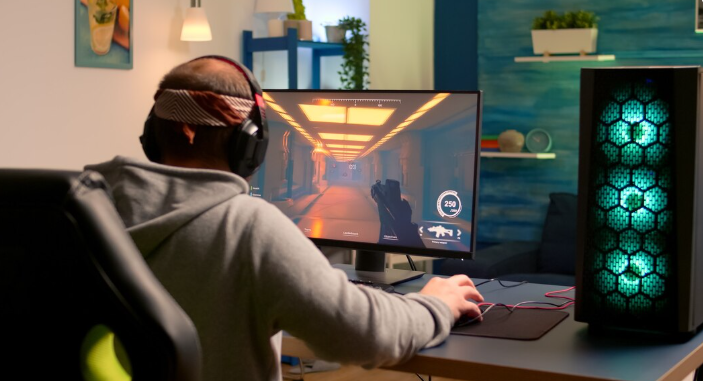
The OLED gaming monitor has revolutionized the gaming experience by offering unmatched picture quality, lightning-fast response times, and stunning color accuracy. As gaming technology continues to evolve, OLED displays have emerged as the gold standard for gamers who demand the best in visual performance and immersion. Unlike traditional LCD or LED monitors, OLED panels use self-emissive pixels that produce true blacks, infinite contrast ratios, and vibrant colors. This technology not only enhances the visual appeal of games but also provides smoother motion and reduced input lag, making it ideal for competitive and casual gamers alike. This comprehensive guide explores everything about OLED gaming monitors—from their technology and benefits to buying tips and maintenance—helping gamers make an informed decision when upgrading their setup.
What Is an OLED Gaming Monitor?
An OLED gaming monitor uses Organic Light Emitting Diode (OLED) technology, where each pixel emits its own light independently. Unlike traditional LED or LCD monitors that rely on a backlight, OLED panels can turn individual pixels on or off, resulting in perfect blacks and infinite contrast ratios. This self-emissive nature allows OLED monitors to display deeper shadows, brighter highlights, and more accurate colors. For gamers, this means a more immersive experience with lifelike visuals and enhanced depth perception. OLED monitors are also thinner and more energy-efficient, making them a premium choice for those who value both aesthetics and performance.
How OLED Technology Enhances Gaming Performance
OLED technology significantly enhances gaming performance by delivering ultra-fast response times and high refresh rates. The near-instantaneous pixel response eliminates motion blur and ghosting, ensuring smooth transitions during fast-paced gameplay. This is particularly beneficial for competitive gamers who rely on precision and quick reactions. Additionally, OLED monitors offer exceptional color accuracy and wide viewing angles, allowing players to enjoy consistent visuals from any position. The deep blacks and vibrant colors create a cinematic experience, making games appear more realistic and visually striking. Combined with low input lag, OLED monitors provide a seamless connection between player input and on-screen action, giving gamers a competitive edge.
Benefits of Using an OLED Gaming Monitor
The benefits of OLED gaming monitors extend far beyond visual appeal. One of the most notable advantages is the infinite contrast ratio, which enhances detail in both dark and bright scenes. This makes OLED monitors ideal for games with complex lighting environments, such as open-world adventures or horror titles. The superior color reproduction ensures that every hue appears rich and accurate, bringing game worlds to life. OLED panels also support advanced HDR (High Dynamic Range) formats, offering greater brightness and dynamic range for stunning realism. Furthermore, OLED monitors are known for their sleek design and energy efficiency, consuming less power compared to traditional backlit displays. For gamers seeking the ultimate combination of performance and aesthetics, OLED technology delivers an unparalleled experience.
OLED vs LED and LCD Monitors: Which Is Better for Gaming?
When comparing OLED to LED and LCD monitors, the differences are immediately noticeable. LED and LCD monitors rely on backlighting, which can cause uneven brightness and limited contrast. OLED monitors, on the other hand, produce light at the pixel level, resulting in perfect blacks and superior contrast. This allows for more accurate color representation and deeper immersion. In terms of response time, OLED panels outperform LED and LCD displays, offering near-instantaneous pixel transitions that eliminate motion blur. However, LED and LCD monitors are generally more affordable and less prone to burn-in, making them suitable for budget-conscious gamers. Ultimately, OLED monitors provide the best visual quality and performance, making them the preferred choice for serious gamers who prioritize image fidelity and responsiveness.

Top Features to Look for in an OLED Gaming Monitor
When choosing an OLED gaming monitor, several key features should be considered to ensure optimal performance. Refresh rate is one of the most important factors, with 120Hz or higher being ideal for smooth gameplay. Response time should be as low as possible—preferably 0.1ms—to minimize motion blur. Resolution also plays a crucial role; 4K OLED monitors offer stunning clarity, while 1440p models provide a balance between performance and visual detail. HDR support enhances brightness and contrast, delivering more realistic visuals. Additionally, look for G-Sync or FreeSync compatibility to eliminate screen tearing and stuttering. Connectivity options such as HDMI 2.1 and DisplayPort 1.4 are essential for supporting high frame rates and resolutions. Finally, consider the monitor’s size and curvature, as these factors influence immersion and comfort during extended gaming sessions.
Potential Drawbacks of OLED Gaming Monitors
Despite their many advantages, OLED gaming monitors do have some drawbacks. The most commonly discussed issue is burn-in, which occurs when static images remain on the screen for extended periods, causing permanent image retention. However, modern OLED monitors include pixel-shifting technologies and screen savers that significantly reduce this risk. Another concern is price, as OLED monitors are generally more expensive than LED or LCD alternatives due to their advanced technology. Additionally, OLED panels may have slightly lower peak brightness compared to high-end LED displays, which can affect visibility in extremely bright environments. Nonetheless, for most gamers, the benefits of OLED—such as superior contrast, color accuracy, and response time—far outweigh these limitations.
Best OLED Gaming Monitors in 2025
As OLED technology continues to advance, several models stand out as top choices for gamers in 2025. The LG UltraGear 27GR95QE-B offers a 27-inch QHD OLED display with a 240Hz refresh rate and 0.03ms response time, making it perfect for competitive gaming. The Alienware AW3423DW features a 34-inch curved QD-OLED panel that combines OLED’s deep blacks with quantum dot color accuracy, delivering breathtaking visuals. For console gamers, the ASUS ROG Swift PG42UQ provides a massive 42-inch 4K OLED screen with HDMI 2.1 support, ideal for next-gen consoles. The Corsair Xeneon Flex 45WQHD240 introduces a flexible OLED design that allows users to switch between flat and curved modes. Each of these monitors exemplifies the cutting-edge performance and innovation that OLED technology brings to gaming.
How to Maintain and Care for an OLED Gaming Monitor
Proper maintenance is essential to preserve the longevity and performance of an OLED gaming monitor. To prevent burn-in, avoid displaying static images such as HUDs or logos for extended periods. Enabling built-in screen savers and pixel refresh functions can help maintain pixel health. Adjusting brightness and contrast settings to moderate levels also reduces strain on the panel. It’s advisable to use dark mode in applications and vary content regularly to ensure even pixel usage. Cleaning the screen with a soft microfiber cloth and avoiding harsh chemicals will keep the display pristine. By following these care tips, gamers can enjoy the stunning visuals of their OLED monitor for many years without degradation.
Conclusion
The OLED gaming monitor represents the pinnacle of display technology, offering unmatched visual fidelity, responsiveness, and immersion. Its ability to produce true blacks, vibrant colors, and ultra-fast response times makes it the ultimate choice for gamers seeking the best possible experience. While OLED monitors come at a premium price, their performance and aesthetic advantages justify the investment for serious gamers and content creators. As technology continues to evolve, OLED displays are becoming more accessible, setting a new standard for gaming excellence. Whether for competitive esports or cinematic single-player adventures, an OLED gaming monitor transforms every frame into a masterpiece of clarity and color.
Frequently Asked Questions (FAQ)
1. What makes OLED gaming monitors better than LED monitors?
OLED monitors offer self-emissive pixels that produce true blacks, infinite contrast, and faster response times, resulting in superior image quality and smoother gameplay.
2. Do OLED gaming monitors suffer from burn-in?
While burn-in is possible, modern OLED monitors include pixel-shifting and screen refresh technologies that minimize the risk significantly.
3. Are OLED monitors good for competitive gaming?
Yes, OLED monitors are excellent for competitive gaming due to their ultra-fast response times, low input lag, and high refresh rates.
4. What is the lifespan of an OLED gaming monitor?
With proper care and moderate brightness settings, an OLED gaming monitor can last between 30,000 to 50,000 hours of use.
5. Can OLED monitors be used for both PC and console gaming?
Absolutely. Many OLED monitors feature HDMI 2.1 ports, making them compatible with next-gen consoles like the PlayStation 5 and Xbox Series X.
6. Are OLED monitors worth the price?
Yes, for gamers who prioritize visual quality, responsiveness, and immersion, OLED monitors are well worth the investment.
7. How can I prevent burn-in on my OLED gaming monitor?
Avoid static images, use screen savers, enable pixel refresh features, and vary content regularly to prevent uneven pixel wear.


